Recycling and Sustainability for Landscapers Canary Wharf
 Landscapers Canary Wharf takes a practical, area-specific approach to eco-friendly waste disposal and sustainable rubbish removal, supporting greener outdoor spaces across the docklands, riverside developments, and nearby business districts. Our recycling-first process is designed to reduce landfill, recover useful materials, and keep landscaping projects aligned with modern sustainability goals. From garden clearance waste to hard landscaping spoil, we aim to make every collection part of a cleaner circular system.
Canary Wharf and the surrounding boroughs are shaped by a mix of residential towers, commercial estates, managed plazas, and waterside green spaces, which means waste streams can be varied. Landscaping waste recycling here often includes soil, turf, branches, pallets, plastics, metals, and inert rubble from site work. We sort these materials carefully so that recyclable fractions are separated from general waste at the earliest possible stage, helping improve reuse rates and reduce unnecessary disposal.
Our goal is to achieve a minimum 85% recycling rate target across suitable landscaping waste streams, with continual review to improve performance year on year.  This target guides everything from collection planning to transfer station selection and material segregation. It also reflects the expectations of local stakeholders who value greener operations, lower emissions, and a cleaner public realm.
To support responsible processing, we use trusted local transfer stations and waste management facilities in East and Greater London where materials can be weighed, separated, and directed to the correct recycling route. Depending on the load, this may include green waste processing, inert waste recovery, metal recycling, timber sorting, and general waste transfer for residual items. Using nearby facilities helps cut journey distances and keeps the carbon footprint of Canary Wharf landscapers as low as possible.
We also maintain partnerships with charities and community organisations that can make use of suitable surplus materials. Donated planters, reusable timber, topsoil in good condition, and selected hardscape components may be redirected to charitable reuse projects where appropriate. These partnerships are an important part of our approach to sustainable rubbish disposal, helping extend the life of resources while supporting local community benefit.
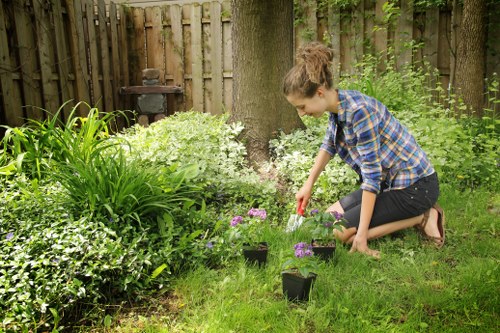 In practice, this means a strong focus on reuse before recycling. If items are safe and fit for purpose, we look first at whether they can be repurposed for community gardens, educational spaces, or charitable landscaping initiatives. Only after assessing reuse potential do we move on to material recycling or responsible disposal. This hierarchy ensures that our landscaping waste handling in Canary Wharf supports both environmental and social value.
Transport also matters. Our fleet includes low-carbon vans designed to reduce fuel use and emissions on short urban routes. These vehicles are ideal for the stop-start conditions common around Canary Wharf, where access routes, loading restrictions, and controlled delivery windows can make efficiency especially important. By using modern, cleaner vans and route planning that avoids unnecessary mileage, we strengthen the sustainability profile of every collection.
Across the boroughs that serve the area, waste separation is increasingly structured around material type, and our procedures reflect that local emphasis. Green waste is kept separate from soil and rubble; wood is sorted away from metals and plastics; and recyclable packaging is isolated from contaminated mixed waste. This kind of separation supports borough-level recycling systems and helps ensure that the right material goes to the right processing stream. For landscapers in Canary Wharf, that means better resource recovery and less contamination.
We also pay close attention to seasonality. During planting projects, pruning cycles, and end-of-summer clearances, green waste volumes can rise sharply.  Our recycling strategy adapts by scheduling efficient collection rounds and directing organic matter toward composting or other biological treatment options where available. This is especially useful for leaves, grass cuttings, hedge trimmings, and soft garden waste that can be transformed into useful soil improvers rather than discarded.
Hard landscaping projects generate a different profile of waste, and our sustainable rubbish area planning reflects that too. Concrete, stone, paving offcuts, bricks, and ceramic fragments are assessed for recovery where possible, while clean aggregates may be routed to appropriate recycling facilities. Keeping these inert materials separate supports more efficient processing and aligns with the broader sustainability priorities of recycling for landscapers Canary Wharf.
We also encourage low-impact packaging management on site. Bags, wraps, and delivery materials are separated where recyclable, while damaged containers and mixed residues are handled through the correct disposal chain. This attention to detail helps reduce cross-contamination, which is one of the main barriers to high recycling performance in urban landscaping operations.
 The result is a cleaner, more accountable service model built around sustainability from start to finish. Whether the project involves a private courtyard, managed estate, commercial terrace, or public-facing planting scheme, our eco-minded waste handling supports a greener finish. Landscapers Canary Wharf continues to prioritise low-carbon transport, material recovery, charity reuse, and efficient processing so that every project contributes to a more sustainable local environment.

